Authenticity
is accuracy of source. It is the difference between that twelve-year, single malt scotch sitting in front of you and some cheap imitation distilled in Bough’s backyard somewhere in the Bible belt, most likely Tennessee or Alabama. It is the freshly ground and pressed Ethiopian Yirgacheffe as compared to Folgers burnt in an industrial coffee maker, that one in the break room at Kroger.
We might ask questions like, “Was the document truly written by the person or people to whom it is attributed?” and, “Was it written during the proper timeframe?” Is this really from Scotland? Was it distilled by a Scotsman? Was it grown by an Ethiopian, roasted correctly, and paid for by fair trade standards? Most of the time, authenticity for any document is impossible to prove conclusively. Even though I am writing this to you, in this room, I could never prove beyond any suspicion that I have written this after you receive it. For all you know, it was someone else pouring hours into this note and my name was simply placed on the cover. Though, I assure you that I would never want to take credit for anyone else’s work. I am convinced that ghost-writing is one of the greatest travesties of our time. All we can do for any document, especially one of antiquity, is prove that it is more likely authentic than not.
Authenticity is not synonymous with reliability. Don’t worry, I’ll get there. If a document is not authentic, though, it cannot be reliable as a source. Reliability depends on authenticity, but not everything that is authentic is reliable. As we apply this to our thinking about the Holy Bible, we must realize that if it is not authentic, it cannot be reliable. If it is authentic, that doesn’t necessarily mean it represents what is true or that its claims are meaningful.
Old Testament
It is more difficult to track the authenticity of the Old Testament than the New because it is a much more ancient set of documents. Essentially, we defined the Old Testament canon by adopting what had been passed down through the Israelite nation for centuries and what was already accepted by the nation as Hebrew Scripture. It had been passed down and accepted as Israel’s history and culture. This speaks volumes of authenticity because the people by whom Hebrew Scripture was developed are still around, existing even as a national people. We can guarantee that as long as the American people are around, the content of the constitution will be preserved at all costs even if the original document one day perishes. The Old Testament canon was completed by around 435 B.C. and the oldest manuscripts currently date back to 150 B.C. (from both the Dead Sea Scrolls and the Greek Septuagint). While I sit here writing this, the oldest and complete manuscripts date back to the 4th Century A.D.
When compared, no significant differences are found between the oldest and newest manuscripts. This means that it is more likely that even the most recent manuscripts are accurate representations of the autographs (the original documents). Added to this, there is no textual or historical evidence to suggest that the Old Testament is not authentic.
While a proper study would require us to walk through the documents in the Old Testament and measure the authenticity of each work by considering the authorship and date of each one, this is sufficient for our current purpose. With the given information, we can conclude that the current Old Testament is more likely authentic than not.
New Testament
The authenticity of the New Testament can be more readily traced because it is more recent than the Old Testament. Please keep in mind, we are not yet exploring reliability, only authenticity. All of the documents within the New Testament were written within the First Century A.D. Before any New Testament book was officially listed as a part of the New Testament, it endured rigorous textual criticism. While we don’t have the time to discuss every component of textual criticism (I only have so much bourbon), there is one condition that the books had to meet before they were considered to be Scripture by the early church. That condition is known as apostolicity. Apostolicity is simply this: the autograph had to be produced by someone who knew the incarnate Christ or someone who followed a follower of the incarnate Christ, just as good scotch is only authentic if it is made by a scotsman in his homeland. This means that the books with the greatest degree of question are Hebrews (which was believed to be written by Paul but is now questioned by scholars), and Mark, which was written by a disciple of Peter (we don’t know if Mark ever met Christ in the flesh). Any questionable material was not accepted into the canon, and many works were rejected by both the early church fathers, modern day Protestants, and Catholics (Though the Orthodox and Catholic traditions have added what was not in the Hebrew Scriptures to the Old Testament).
The earliest list of books included in the New Testament canon surfaced in A.D. 367 and included all of the books that are in the canon today; about 250 years after the documents in the New Testament were written. This means that the collection had been in circulation long enough for its contents to actually be questioned. The copying and distribution of the New Testament, then, occurred very shortly after the autographs were produced. There was not much time for edits to be made or for details to be changed.
Added to this, the earliest manuscripts date to between A.D. 125-200. This means the generation that saw the autographs would have still been alive and any edits would have been discovered. The great conspiracy would have been uncovered and burned under the scrutiny of the eye-witnesses and whistle-blowers. There are no significant variations between these earliest manuscripts and the latest manuscripts that we have available today. There was also not enough time for legend to develop within the text. Furthermore, there is no textual or historical evidence to support the claim that the New Testament manuscripts are not authentic. Therefore, the New Testament manuscripts are most likely authentic.
The Whole Bible
When it comes to the authenticity of the whole of the Bible, we can consider the number of manuscripts. There are more than 20,000 ancient manuscripts that have been discovered and examined critically. The earliest manuscripts are dated to about 100 years after the autograph and no autographs are available. Remember, we are still not talking about reliability. There are other texts that are considered by even the most critical scholar to be authentic. Caesar’s Gallic Wars, for instance, only has 10 manuscripts that have been discovered and the earliest manuscript is dated to about 1,000 years after the autograph is presumed to have been produced. Similarly, Aristotle’s Poetics only have about 5 manuscripts that have been discovered, and the earliest manuscript is dated to about 1,400 years after the autographs are presumed to have been produced. This means that both of these ancient documents, that are considered by most scholars to be authentic, have much less textual evidence supporting their authenticity than does the Bible. This will be the case with virtually any other document of antiquity.
The collection of documents we call the Holy Bible, then, actually have more textual and historical evidence supporting their authenticity than any other historical or literary work in antiquity. Just the evidence mentioned here is so powerful that if we decide or claim that the Bible is not authentic, then we must also decide or claim that any other historical or literary work in antiquity is not authentic. If we do anything else, then we are contradictory in the way that we approach scholarship. Furthermore, the shear number of years over which the Bible was written (1500 years) supports the authentic nature of the collection as a whole.
Here I have to add a side note. Any scholastic institution that refuses to teach the Bible must refuse to teach all history and literature because the Bible has surpassed all other literary and historical work regarding evidence in favor of its authenticity. Even in secular schools, this becomes a historical and a literary matter, not a matter of mere religion. The Bible is the most important book to teach at any institution that hopes to actually educate concerning history and literature, and I think that scares some people. Without teaching the Bible, education is mediocre at best. The Bible must be taught well if we hope to be well-educated people. When the ten commandments are displayed on state property, they can be displayed on a historical, civic, and literary basis, not necessarily on a religious one. The Ten Commandments, then, cannot be removed because they are religious, for they are historically, civically, and literarily displayed.
Reliability
is essentially the accuracy of truth claims present in any document. Whiskey from Scotland isn’t necessarily scotch. Coffee from Ethiopia isn’t necessarily rich or full. Reliability is important. The Bible makes certain claims regarding reality and we want to know if we are justified in believing what the Bible claims. Here, there is a great danger. There are many people who refer to themselves as Christians and who will say something to the effect of, “I believe this because the Bible tells me so!” That may be good, but the follow up question is always going to be, “Well, how can I know that I can actually believe the Bible?” We are a society in which all authority is questioned and in which people are skeptical and overly critical of everything. If we hear someone make a claim, we want to know that we can trust that person before we actually believe him or her. The same is true when we consider the Bible, especially for those who are not already believers. They want to know that they can trust the claims made in the Bible. So, we should also strive to know that we are justified in believing the claims within the Biblical text.
When we talk about Biblical reliability, or the reliability of any document for that matter, we look at three things: authenticity (which has already been discussed), coherency (whether a document is internally sound or self-contradictory), and correspondence (whether a document paints an accurate picture of the world or not).
Correspondence
Does the Bible paint an accurate picture of the world we live in? First of all, in every account and in every story, the Bible accurately describes the major eras throughout human history. In fact, the stories in the Bible seem to directly parallel the major eras in human history. Hebrew structures have been found in Egypt. A tomb that is believed to be Joseph’s tomb was discovered. Inside is a statue of a man with red hair and with a coat of many colors. There were also Hebrew housing divisions in the same city. Egyptian hieroglyphs tell the story of foreign rulers who were in the land and who were driven out around the time of the Exodus. The Egyptians referred to these foreign rulers as the Hyksos. Added to this, Roman persecution is evident in the historical records just as described in the Bible until A.D. 313, when the Edict of Milan was signed (which outlawed the persecution of Christians). There are even possible sites that have been discovered for the cities of Sodom and Gomorrah and these sites were covered in a layer of ash. While this is not a comprehensive look at the evidence, we can see that the Bible is accurate regarding many major historical events. As historical evidence is considered, the realization should be made that no event in the Bible has ever been disproven; not even a worldwide flood as described in the text. Again, we must remember the difficulty of proving or disproving any worldview and especially any historical event.
While there are many instances in which the Bible has been authenticated by archaeological evidence, that is not the case with every event in the Bible. Not every event in the Bible has archaeological evidence to support it. When we encounter these, we can know that absence of evidence is not evidence of absence. After all, some scientists still try to prove darwinian evolution even though it has not and cannot be observed. There are many good scientists who also spend their time looking for extraterrestrial life even though there is no apparent evidence to support the existence of that other-world intelligence. If the Bible is accurate in what it has described and that has also been attested to in archaeology, and has not been disproven on any account, then it is most likely believable in the events that have not been attested to archaeologically.
The Bible also accurately describes the imperfect state of the world and of people. Where the Bible has made predictions and those predictions have come to pass, those predictions in the Bible have been accurate. There are anywhere from 1,800-2,500 predictions made in the Bible depending on how those predictions are counted. 1,200-2,000 of them have been fulfilled without any deviation. If the Bible is accurate in its record of history and accurate in the predictions that it has made, then the Bible most likely corresponds to reality.
Coherence
So, the Bible corresponds to reality in every degree that it has been tested and is testable. Does the Bible contain contradictions? Does it contradict itself?
There are about 40 different human authors spanning 1,500 years. All of these human authors throughout these 1,500 years tell the same story and that story does not change. Despite many attempts, no legitimate contradictions have been found within the collection of documents that together make up the Holy Bible.
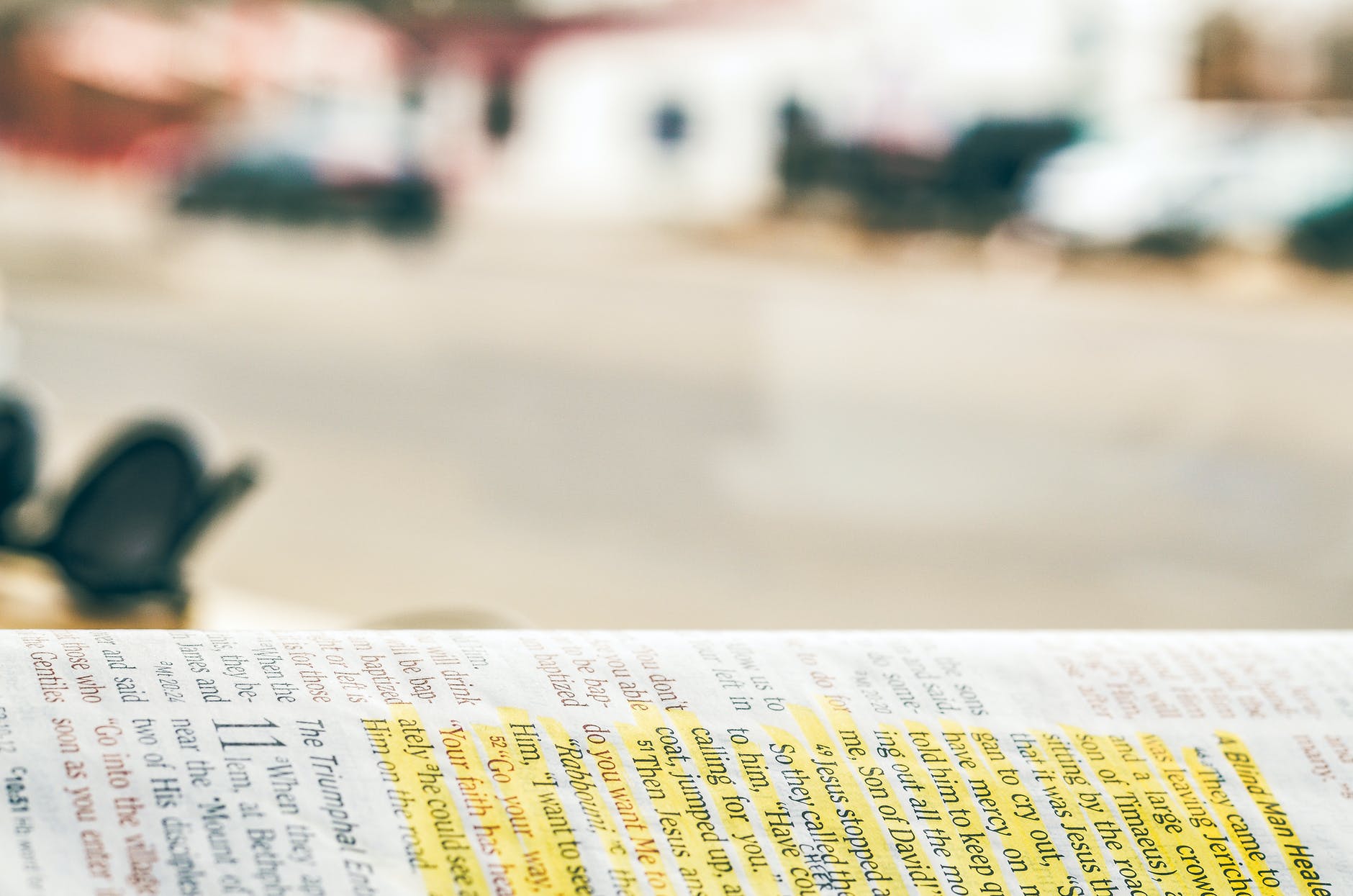
In order to better understand the types of details that are proposed as contradictions by some, we can explore the Biblical text. We can read Matthew 28:1-8 and Luke 24:1-10. It is the account from two Gospels about the discovery of the empty tomb. Oh, look! You have this bookmarked with your notes in the margins. In Matthew’s Gospel, one angel is recorded as descending from heaven and rolling away the stone. In Luke’s Gospel, there are two men in dazzling clothing who suddenly appear. There is no record of these men or angels rolling away the stone or descending from heaven. Are there any contradictions? Some would insist that there are. If angels appear visually to be men, then both are accurate descriptions. If there are two, then there must also be one. In order for there to be a contradiction regarding the number of angels present, the text would have to read, “There was one and only one angel.” When details are absent from one account, it does not mean that those details are not accurate. Rarely do we remember all of the details when we are recalling a story. There are no contradictions, here.
This is the case with virtually every proposed contradiction in the text of Scripture. Either this, or people have misread the text of Scripture. Difference is not disjunction. The reality is, most people who try to point out Biblical contradictions only point out differences in the recounting of events. The Bible is internally coherent, and this means the Bible is most likely both authentic and reliable. It also outshines every other historical and literary document in antiquity because it is more sound and is more attested to than any other document. The Bible has also withstood centuries of close and critical examination to a degree that no other document in human history has. It has withstood even the tests of time and human cynicism.
Leave a Reply